Conversation Prompts for Parents: Talking About Sensitive Topics

Boy wearing hoody and glasses looking a cell phone in the dark.

Saprea > Blog > All Blogs > Conversation Prompts for Parents: Talking About Sensitive Topics

Share this blog on:
35384:full

Conversation Prompts for Parents: Talking About Sensitive Topics

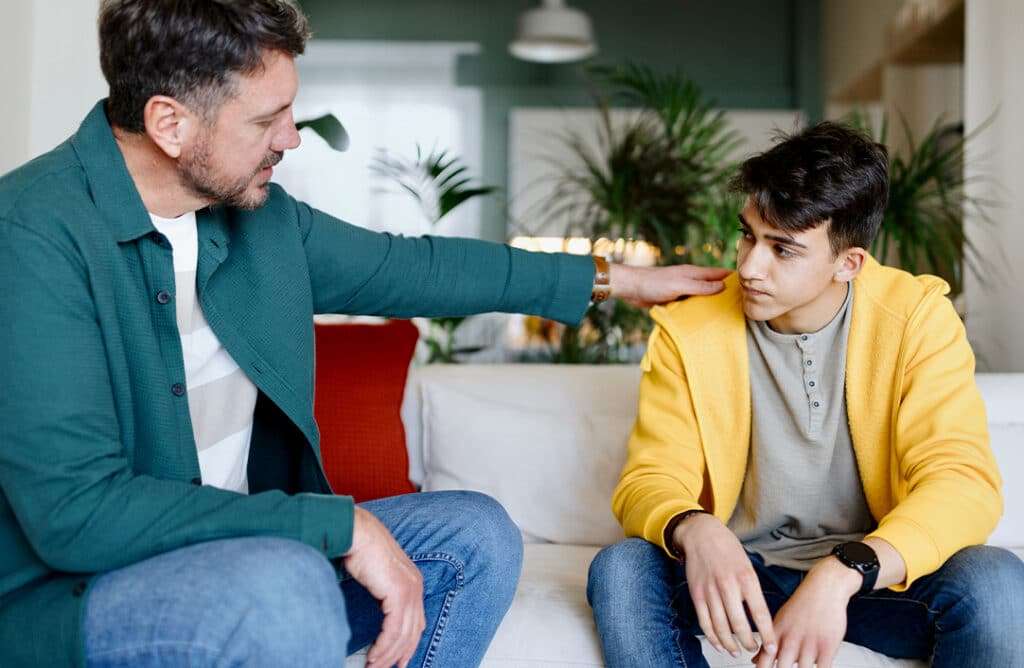
Talking with teens about sensitive topics like online safety and sextortion can feel uncomfortable, but these conversations are an important part of helping them navigate today’s digital world. Many parents worry about saying the wrong thing or overwhelming their teen with warnings. In reality, short, supportive conversations often work better than long lectures. Using simple prompts and everyday moments to check in can help teens recognize risks, understand healthy boundaries, and feel safe coming to you if something goes wrong online.

Here are practical conversation prompts that you as a parent (or caregiver) can use to open discussions about these sensitive topics in supportive ways.

Starting the Conversation About Online Safety

Rather than beginning with warnings or rules, start with curiosity and openness. Try asking: "What apps and social media accounts are you using these days? Can you show me how they work?" This question demonstrates interest without judgment and gives you valuable information about their digital world. Follow up with: "Who do you usually talk to on there? Friends from school or other people too?" This helps you understand their online social network without seeming accusatory.

Another effective opener uses current events: "I saw a news story about teens being targeted by others online. Have you heard anything about that happening at your school or with people you know?" This approach makes the topic concrete and relevant while creating space for your teen to share concerns without feeling like they're in trouble.


Introducing the Topic of Sextortion Without Fear

Saprea recommends little talks instead of lengthy talks. Try this approach: "Hey, I learned something concerning and want to check in with you. Have you ever had someone online ask you for pictures of yourself, especially explicit images? If that happens, I want you to know you can always tell me and you won't be in trouble." The explicit statement that they won't face punishment is crucial.

You might also ask: "If someone you met online started making you uncomfortable or asked for sexual content, what would you do? Who would you tell?" This prompt helps you understand their current plan and allows you to clarify that you want to be their first resource. It also reveals whether they understand the available support services.


Discussing Red Flags and Warning Signs

Use "what if" scenarios to explore situations without accusing your teen of anything. Try: "What would you think if someone you just met online said they felt really connected to you and wanted to video chat privately right away?" Let them respond, then discuss why that's a red flag—healthy relationships build gradually, and pressure to move fast or get private is a warning sign of manipulation.

Another scenario: "Imagine someone online offers you gift cards or money for photos. What do you think is really going on there?" This opens discussion about scammers who target others specifically with financial sextortion schemes. You can explain that legitimate people never offer payment for images, and this is always a setup for online blackmail or other potential exploitation.


Building Trust

Perhaps the most important conversation establishes what happens if they make a mistake or face victimization. Say directly: "I need you to know something important. If you ever send someone an explicit image and they threaten you, or if you get into any kind of trouble online, please come to me immediately. You will not be punished. I will not take away your phone or get angry. We will handle it together, and the person threatening you is the one who is breaking the law."

You can add: "Even if it starts on an app you're not supposed to be on, or if you made choices you regret, you can still tell me. My job is to protect you and get you help, not to punish you." This message directly addresses the shame that prevents disclosure in 81% of cases.1


Checking Understanding of Consent and Pressure

Discuss the difference between freely choosing and being pressured. Ask: "How would you know if someone was pressuring you versus you actually wanting to do something online?" This helps young people recognize coercion. Follow with: "You know that you never owe anyone explicit images, right? Not even if you've been dating, not if they sent you pictures first, not if you said yes before. You can always change your mind."

For context on relationships, try: "In healthy relationships, whether online or in person, how do people treat each other? What should never be okay?" Let them answer, then emphasize: "Healthy partners never pressure you for sexual content, never threaten you, and never share your private photos without permission."


Addressing Privacy and Security

Rather than demanding access to everything, discuss why privacy settings matter, and work together to protect privacy. Ask: "Who can see your posts and profile right now—just friends, or anyone? Do strangers message you?" Then explain: "Keeping your social media accounts private makes you safer because criminals look for young people with public profiles. Can we check your settings together?"

On passwords and monitoring, try: "I'd like to know your passwords not because I don't trust you, but so if something goes wrong or you need help, I can access your accounts to fix it. Does that make sense?" Frame monitoring as collaborative online safety rather than distrust.


When You Suspect Something Is Wrong

If your teen seems withdrawn, anxious, or is hiding their phone more than usual, approach with concern not accusation. Say: "I've noticed you seem stressed lately. Is everything okay online and at school? Sometimes people struggle with things they're afraid to talk about." Give space for them to respond without pushing.

If you have specific concerns about sextortion or online blackmail, be direct but supportive: "I'm worried something might be wrong. If someone online is making you uncomfortable, threatening you, or has pictures they're using to pressure you, we can fix this together. You're not in trouble with me—I just want to help." Then be quiet and give them time to answer.


Following Up Regularly

These conversations shouldn't happen just once. Brief check-ins work well: "Anything weird happen online this week?" Or: "Remember what we talked about before—about people online who pressure teens for pictures? That offer still stands to come to me if anything like that happens." Regular, casual mention keeps the topic present without being overwhelming.

Healthy vs. Unhealthy Digital Interactions:
Teaching Teens the Difference

Understanding the difference between healthy and unhealthy digital interactions can help teens navigate online spaces with greater confidence. While many online friendships and conversations are positive, some people use manipulation, pressure, or secrecy to gain trust and exploit others. By talking with teens about the common traits of healthy relationships—such as respect for boundaries, transparency, and mutual comfort—parents can help them recognize warning signs early and make safer decisions online.
Healthy Interactions
Unhealthy Interactions
Healthy Online Friendships Start Slowly
Unhealthy Interactions Move Too Fast
Healthy Interactions Respect Privacy and Boundaries
Unhealthy Interactions Involve Pressure and Manipulation
Healthy Digital Friends Can Be Verified
Unhealthy Contacts Hide Their Real Identity
Healthy Relationships Feel Comfortable and Safe
Unhealthy Relationships Create Anxiety and Fear

Teaching young people these distinctions give them the framework to evaluate online interactions themselves. When teens understand what healthy looks like, they're better equipped to recognize the manipulation tactics of sexual extortion before becoming victims. Parents should discuss these differences regularly, using real examples from news stories or hypothetical scenarios to reinforce the concepts.

Practical Prompts and Supportive Conversation

Talking with teens about online safety and sextortion doesn’t have to be intimidating. By using practical prompts, real-life scenarios, and open, supportive conversations, parents can help their teens recognize red flags, understand healthy digital relationships, and feel safe seeking guidance. Regular check-ins build trust and empower teens to navigate online spaces confidently.

Common Platforms Where Sextortion Begins

teenage girl looking at laptop screen in a dark room.

Saprea > Blog > All Blogs > Common Platforms Where Sextortion Begins

Share this blog on:
35379:full

Common Platforms Where Sextortion Begins

Today’s young people connect, play, and socialize across dozens of digital platforms—often moving seamlessly between social media, gaming, messaging apps, and livestreams. While these spaces can offer creativity and connection, they also create opportunities for criminals who exploit trust and curiosity. Sextortion frequently begins with a seemingly harmless message, friend request, or gaming conversation. By understanding where these schemes commonly start and how perpetrators operate across platforms, parents can better recognize the risks and help their teens navigate online spaces with greater awareness and safety.

Where Sextortion Conversations Often Begin

Sextortion rarely starts with an obvious threat. More often, it begins in everyday digital spaces where young people already spend their time—social media feeds, gaming chats, livestream comment sections, or messaging apps. Perpetrators intentionally seek out platforms that make it easy to connect with strangers, build quick rapport, and move conversations into private messages. Understanding how these environments work—and why they appeal to criminals—can help parents recognize where risks are more likely to emerge and guide their teens in navigating these spaces more safely.

Social Media Platforms with Direct Messaging

Social media represents one of the most common starting points for sextortion schemes. Perpetrators create fake online accounts with stolen photos, build followers to seem legitimate, then send direct messages to potential victims. The platform's visual nature makes it easy for perpetrators to find young people through hashtags, location tags, and suggested accounts. They comment on public posts to establish familiarity before moving to private messages. Adult perpetrators use trending media and references to seem relatable to young people.


Gaming Platforms and Chat Features

Gaming environments have become major vectors for sextortion targeting teenage boys specifically.1 Messaging servers, originally designed for gamers to communicate during play, often include thousands of strangers in chat rooms. Criminals join these servers, identify young users through their voices or comments about school, then send private messages. Many games include chat features where strangers can communicate. While these platforms have some safety features, determined perpetrators find ways around them, especially when young people use third-party communication apps alongside gaming and some messaging systems connect players globally. Criminals can befriend young gamers through cooperative play, then introduce personal conversation and eventually sexual content.2


Livestreaming and Video Features

Some sites and platforms have video chat sites that directly connect strangers for video conversations. These platforms are designed for anonymous interactions and have minimal safety protections, making them extremely high-risk for young people. Twitch and YouTube Gaming allow viewers to message streamers directly. Young people who stream themselves gaming may receive messages from seemingly friendly viewers who want to "talk more privately." Instagram Live, TikTok Live, and Facebook Live features let young people broadcast to audiences, including strangers. Sextortion perpetrators watch these streams, learn about victims, then contact them privately after the stream ends.


Anonymous Messaging and Encrypted Apps

Criminals typically move conversations to these platforms after initial contact elsewhere. Some of these apps have been repeatedly identified in law enforcement agency reports as a platform used in child sexual exploitation. When an app has anonymity features, like when no phone number is required to register, it makes it attractive to perpetrators to use to exploit.


Dating and "Meet New People" Apps

While most have age restrictions, young people can lie about their age to access them. Tinder, Bumble, and similar apps are used by perpetrators specifically seeking young victims. Some teens use these apps out of curiosity or to seek romantic relationships. Similar apps marketed as "social discovery" for teens create opportunities for adults to pose as peers. Despite verification attempts, fake online accounts proliferate on these platforms.

What Makes These Platforms Risky

Several features consistently appear across high-risk platforms. Direct messaging with strangers is the primary risk factor—any platform allowing private communication between people who don't know each other in real life creates an opportunity for manipulation. Photo and video sharing capabilities let perpetrators send explicit images to normalize sexual content and allow victims to send the sensitive material that becomes leverage. Moving between platforms enables criminals to isolate victims from oversight and create the secrecy needed for sexual exploitation. Live video features provide opportunities for real-time recording of sexual content. Anonymity and account creation ease means perpetrators can create multiple fake online accounts without verification.

The Platform Is Less Important Than the Pattern

While these platforms see frequent sextortion cases, the specific platform matters less than the behavior pattern. Criminals adapt to whatever platforms young people use. When one platform improves safety features, perpetrators simply move to another. This is why teaching young people to recognize manipulation tactics proves more effective than trying to ban specific apps. The red flags—strangers who contact you out of nowhere, conversations that turn sexual quickly, pressure to move to private messaging apps, requests for explicit images—remain consistent regardless of where the initial contact occurs.

In 2026, there are a number of platforms commonly used by online blackmailers in sextortion activities in targeting young people.

Platform Type
Examples Include:
Mainstream Social Media Apps
Instagram, Snapchat
Emerging Teen Social Apps
Wizz, Hoop, Yubo
Anonymous / Semi Anonymous Apps
Whisper, ASK.fm, Skout
Messaging Platforms
Discord, WhatsApp, Kik, Telegram
Gaming Platforms
Roblox, generalized gaming chats
Video / Content / Streaming Platforms
TikTok, YouTube, LiveMe
Dating Apps
Grindr, Tinder, Bumble
Parents don't need to become experts on every social media account and gaming platform. Instead, focus on these principles: know what platforms your teen uses, understand the basic features and risks of each, maintain open communication about who they're talking to online, and ensure privacy settings are maximized. The goal isn't to prevent all online social interaction but to help young people navigate these spaces safely while recognizing the red flags of sexual extortion.

Recognizing Sextortion Red Flags—No Matter the Platform

Although certain apps and platforms appear more frequently in sextortion cases, the real danger lies in the patterns of manipulation that perpetrators use. Criminals will always follow young people to whatever platforms are popular, which is why awareness matters more than banning specific apps. Teaching teens to recognize red flags—such as strangers initiating private conversations, requests to move to another app, or pressure to share personal images—helps them stay safer no matter where they are online. With open communication, strong privacy settings, and ongoing conversations about digital boundaries, parents can empower their children to enjoy online spaces while recognizing and avoiding the tactics used in sexual extortion.

What Stops Children from Reporting Grooming: Understanding Barriers to Disclosure

A parent sits with a child, offering comfort and support in a softly lit room. The parent has an arm around the child’s shoulders, and they appear to be having a serious, caring conversation.

Saprea > Blog > All Blogs > What Stops Children from Reporting Grooming: Understanding Barriers to Disclosure

Share this blog on:
34449:full

What Stops Children from Reporting Grooming: Understanding Barriers to Disclosure

One of the primary reasons children and teens do not tell an adult about their experience being groomed is because they don’t realize they’re being groomed. A grooming relationship often starts out appearing safe and positive. By the time the relationship becomes uncomfortable, frightening, and/or isolating, many children feel confused and unsure about how to react or who to trust. Recognizing warning signs of grooming behaviors early can help caregivers intervene before children feel trapped in silence.

According to the National Society for the Prevention of Cruelty to Children (NSPCC)1, children may not speak up for a number of reasons. For instance, children and teens may be:

  • Ashamed.
  • Feeling guilty for inappropriate sexual activities they participated in.
  • Believe they are in a romantic relationship with their groomer.
  • Embarrassed to share sexual details with other people.
  • Nervous to get the person grooming them in trouble.
  • Scared of what the groomer will do if they speak out or refuse to comply.
Understanding barriers to children reporting grooming is vital to helping children feel safe and supported. Parents and other caregivers need to create open, non-judgmental environments where kids feel comfortable sharing anything—no matter how confusing or difficult it may seem.

What If My Child Thinks They’re in a Romantic Relationship with Their Abuser

Sometimes, groomers use manipulative and emotionally coercive tactics to convince children and teens that they are in a consensual romantic relationship. They may shower them with attention, affection, gifts, or praise as part of the grooming process in order to build trust and emotional dependence. Over time, this manipulation can blur the lines between affection and abuse, making it incredibly difficult for young people to recognize what’s happening.
Why Children Can’t Consent to a Relationship with an Adult
Saprea firmly denounces the notion that children can consent to relationships with adults. Legally and developmentally, minors are not capable of giving informed consent—especially in the context of a power imbalance where an adult is deliberately exploiting their trust and vulnerability. Adults in a position of power who engage in grooming behaviors are abusers, regardless of how they frame the relationship.
How Groomers Manipulate Feelings of Attachment and Guilt

Children may feel afraid to speak up or resist because they don’t want to “ruin” what they’ve been told is a special or secret relationship. Some may fear losing the emotional connection they've built with the groomer, even if it has become abusive. Others may feel ashamed, confused, or blame themselves for getting involved, making it even harder to seek help. The groomer’s manipulation of the child’s self-esteem and vulnerability makes disclosure even more difficult.

It’s also common for victims to feel they have no choice—that saying "no" isn’t an option. Even when they are deeply uncomfortable or hurt by what they’ve been asked to do, they may believe they’re responsible for maintaining the relationship, or worry that speaking out will lead to punishment, rejection, or harm.

How Parents and Caregivers Can Help

The most important thing for parents and caregivers to remember is this: your child is not to blame. Open, non-judgmental conversations and professional support can make all the difference in helping them break free from this manipulation and begin to heal.

If you suspect your child is being groomed or has experienced child sexual abuse, contact law enforcement or child protection services immediately. For more information about how to best support your child, visit our page about preventing child sexual abuse.

Moving From Isolation to Integration

Isolation is one of the most powerful tactics used in grooming, as groomers systematically distance children from their support networks to maintain control and secrecy. Research on child sexual abuse recovery demonstrates that structured reintegration approaches—including family assessments, gradual transitions, and sustained aftercare—are essential for helping children rebuild healthy connections. Parents play a critical role in this process by actively working to restore their child's access to safe, supportive relationships. This means:

  • facilitating regular contact with trusted family members,
  • encouraging age-appropriate friendships, and
  • creating opportunities for children to participate in activities where they feel valued and connected.

Maintaining open, non-judgmental communication is one of the most powerful protective factors parents can provide as their child transitions away from an exploitative situation.

Studies examining reintegration strategies emphasize that social support networks are fundamental to trauma recovery, and building these networks takes intentional effort and time. Parents should collaborate with mental health professionals who specialize in childhood trauma to develop a comprehensive support plan tailored to their child's specific needs. Professional involvement may be vital throughout the reintegration process, helping families navigate the complex emotional terrain while prioritizing the child's safety and well-being.

Remember that reintegration is gradual—there is no set timeline for healing. Focus on small, consistent steps that help your child feel safe, heard, and supported as they rediscover what healthy relationships look and feel like. Your patience, presence, and unwavering belief in your child's resilience will make all the difference in their recovery journey.

Frequently Asked Questions
About Grooming and Disclosure

Grooming can be difficult for children to recognize, as it often begins as a relationship that seems caring or harmless. Feelings of fear, guilt, or confusion can prevent them from speaking up. This FAQ explores why children may stay silent, how to spot warning signs, and how caregivers can respond with understanding and support.

What is Online Grooming? Understanding Grooming in the Digital Age

Boy with headphones on playing online computer games in dark room

Saprea > Blog > All Blogs > What is Online Grooming? Understanding Grooming in the Digital Age

Share this blog on:
34483:full

What is Online Grooming? Understanding Grooming in the Digital Age

With technology becoming increasingly more accessible, there has been an increase in online grooming. Much like grooming that occurs in-person, online grooming is the technology-facilitated process of befriending a child or teen for the purpose of sexual abuse and exploitation. While some online perpetrators may know the child they are talking to, more often, sexual perpetrators are exploiting the anonymity and accessibility of online platforms to reach potential victims. Unlike in-person grooming, which can occur over weeks, months or even years, online grooming can happen very quickly, even in a matter of hours. When working online, they don’t need to influence adults and control the environment around the child; this potentially makes it easier to establish trust and build the child up more quickly toward sexual discussions or sexual contact.

How Groomers Operate Online Through Social Media and Digital Platforms

Online grooming isn’t limited to obscure corners of the internet; in fact, it often takes place on well-known platforms such as social media, messaging apps, and online games. Using fake profiles, groomers may pretend to be another child or a peer with shared interests, making it easier to gain the victim’s trust. They may even use multiple online platforms to contact the same child. They can spend time learning about the child or teen’s interests from their online profiles and use that information to help them build trust and establish a special relationship. As the online relationship develops, the perpetrator may ask for personal information or encourage private chats, video calls, and secretive behavior. Eventually, they manipulate or coerce the child into sending explicit photos or videos. In many cases, the offender uses this material to blackmail the child into further sexual acts (a form of abuse known as sextortion.)

The tactics used in online grooming are calculated and manipulative. Groomers can maintain frequent or constant contact, intensifying their control and making it difficult for the child to disengage. Some even resort to cyberstalking, using technology to monitor or harass their victims. Understanding these grooming behaviors of perpetrators helps caregivers and other adults to recognize signs of grooming early and protect children and teens from abusers online.

Online Grooming Red Flags and Warning Signs

Many parents may feel like they don’t know what to look for when trying to catch online grooming early. Luckily, if a parent can spot traditional grooming behaviors, they will likely be able to catch online grooming behaviors. One nonprofit, Bravehearts1, nicely outlines seven warning signs and red flags to pay attention to:
01
Asking personal questions too soon
The person is asking your child a lot of questions about personal information (such as their age, school, location, home life etc.) soon after meeting them online. This rapid questioning is a common grooming behavior used to assess the child’s vulnerability to build a close relationship quickly.
02
Asking for favors and building trust
The person starts asking your child for favors and does favors for them in return – abusers often use promises, gifts and favors to gain trust. This exchange creates a sense of obligation and is part of the grooming process designed to establish special attention and emotional dependence.
03
Keeping the 'relationship' secret
Online groomers typically try to keep their relationships extremely private and secret from the beginning, asking for it to be something ‘special’ just between them. Perpetrators thrive when caregivers and family members are unaware of their contact with the child.
04
Frequent and varied contact
The person contacts your child frequently and in different ways, like texting, on social media apps and through online chats or asking them to move their chat onto another platform that has end-to-end encryption.
05
Questions about device access
The person asks your child things like who else uses their device or computer, or which room they use it in. These questions help groomers assess how much privacy they have to escalate grooming behaviors without detection by parents or caregivers.
06
Gives compliments and tests boundaries
The person compliments your child on their appearance or body and/or tests their boundaries by asking things like, ‘Have you ever been kissed?,’ ‘Do you have a boyfriend/girlfriend?,’ and the like. Boundary testing and comments about physical appearance are examples of grooming tactics that target a child’s self-esteem and introduce sexual topics gradually. This is a form of desensitizing the child to sexual content and behavior.
07
Wants to meet in-person
Groomers may insist on meeting with the child and try to make them feel guilty or even threaten them if they are unwilling. Note: not all groomers will attempt to meet in person if their aim is to get sexual images or videos of children (known child sexual abuse material (CSAM)).

How to Protect Children From Online Dangers

As with all types of child sexual abuse, online grooming can have devastating effects on a child's mental health, self-esteem, and safety. The best defense is education—teaching children to recognize red flags, avoid sharing personal information or images, and to feel safe speaking up when something doesn’t feel right. Parents and caregivers should stay informed about the platforms their children use, maintain open and supportive communication, and be aware of changes in their child’s mood or behavior.

Online grooming may take place in the digital world, but its impacts are very real. Through awareness, education, and open dialogue, we can better protect children and young people from these serious threats.

If you suspect your child is being groomed or has experienced child sexual abuse, contact law enforcement or child protection services immediately. For more information about how to best support your child, visit our page about preventing child sexual abuse.

Frequently Asked Questions
About Online Grooming

Online grooming can be complex and difficult to recognize, which often leaves parents and caregivers with many questions about how it happens and what to do if they suspect it. Below are some of the most common questions about online grooming—what it is, how to identify the warning signs, and steps you can take to help keep children safe while using digital platforms.

Child Sexual Abuse – Turning Statistics into Action and Protecting Kids

Saprea > Blog > All Blogs > Child Sexual Abuse – Turning Statistics into Action and Protecting Kids

Share this blog on:
32437:full

Child Sexual Abuse – Turning Statistics into Action and Protecting Kids

Stats are sterile. We are inundated with so much data that we have become numb to their message – that is, until that stat becomes representative of someone we know and love.

Ten years ago, this happened to me. I started working in the social sector, combatting child sexual abuse. Almost immediately, people in my extended family, my neighborhood, my faith community, co-workers, old friends I had not seen in years, and even acquaintances started sharing their experiences as survivors of child sexual abuse.

I'll never forget the emotions that came to me as I heard their stories. First, a humbling wave of gratitude that they trusted me with something so deeply personal. Second, a crushing realization of my own ignorance—how could so many people I cherish have endured such trauma? These weren't distant acquaintances either. Some of them were people I've loved for years, people I consider close. The question haunted me: how had I remained blind to their suffering all this time?

At this time, the stats transformed from sterile numbers to deeply impactful stories. They represented real people, my people. Predictably, I have seen this same pattern repeat over and over with anyone willing to talk openly about child sexual abuse.

The Reality of Child Sexual Abuse Stats

At the risk of providing you with yet another set of figures to remember, let me briefly share the stats of child sexual abuse. UNICEF estimates that one in eight children worldwide are sexually abused.1 The CDC agrees when they report on prevalence in the United States. Citing credible research, the CDC says one in four girls and one in twenty boys will be sexually abused by age eighteen. These numbers are staggering and alarming. However, most research on prevalence narrowly defines child sexual abuse to include some physical touch. Yet, as technology-facilitated abuse has accelerated, we are starting to learn that the rates are much higher. A worldwide leader in prevalence research, Dr. David Finkelhor worked with colleagues to explain prevalence with technology-facilitated abuse added to the rates. We learn that numbers increase significantly to 10.8% of boys, 31.6% of girls, and 41.3% of those identifying as other genders.2

The Power of Survivor Stories

Like many of you, the stats of sexual abuse had never sunk in before all my loved ones shared their experiences, but then and now, these figures scream at me. I can no longer look the other way. I can’t discount the discomfort by saying the research must be wrong or that the research responses must have come from somewhere else and someone else. It was my family, my neighbors, my coworkers sharing their stories. What are we doing as a civilized society? How is it possible that we are not moving heaven and earth to stop this now?

I remember feeling very angry, as I took time to process the accounts of abuse shared with me. Angry at those that harm. Angry at those of us who look away. Angry at a society that decided the topic was too taboo to discuss. One thing about the emotion of anger is that it can be an excellent catalyst for change. We can do great things when we channel our anger into productive action.

Over the past ten years, I have worked to make a change. The impact has been measurable and significant, but compared to the size of the problem, we are just barely moving the needle. There is still so much to be done, and we must invoke a societal shift to see broad change.

Learning from historical, social movements, we see patterns of how big social issues like abuse shift. We’ve seen it in the civil rights movement, smoking cessation, and car seat safety. Following those patterns, we know that societal change happens when there is top-down and bottom-up pressure—without either one, change stalls. Think of top-down pressure like laws, enforcement of laws, awareness campaigns, or organized activism. Consider bottom-up pressure as neighborhood dialogue, organic media, and grassroots activism. Since most who read this article are part of that bottom-up movement, let’s highlight three ways to take action now.

How to Take Action Today

Start talking about the issue with those you love
Do what I did ten years ago—start talking about the issue of sexual abuse with those you love. The stats will become real for you just like they did for me, but more importantly, you will be instrumental in breaking down the taboo of the issue. Every honest discussion chips away at the stigma and makes change possible. No society has solved a problem without first discussing and naming it.
Educate Yourself on the Impacts and How to Reduce the Risk
Educate yourself on the long-term impacts of abuse on survivors as well as how to reduce risk for today’s kids. The organization I work for, Saprea, has tremendous resources, and so do many others.
Commit to Change
From your learning, choose and change one behavior when interacting with your kids. I recommend focusing on age-appropriate conversations about healthy boundaries, but you may pick something else. The key is to begin with personal change. Societal change happens because individuals commit to changing themselves first.

We have solved significant issues as a country and world. We can do it with sexual abuse as well. Don’t let sterile stats be your only connection to survivors and children. Create a world where survivors can heal, and children can maintain their innocence.

About the Author

Image

Chris Yadon, MPA

Managing Director
As Saprea’s first employee and Executive Director, Chris Yadon collaborated closely with the organization’s founders to launch and establish its operations in 2015. Chris now serves as the Managing Director, leading the organization’s public efforts to drive societal change around the issue of child sexual abuse. He has previously held executive leadership positions for start-up tech and healthcare organizations. Chris is committed to driving broad societal change to address child sexual abuse and uses his influence as a thought leader and strategist to inspire others to take action. He firmly believes we can collectively create a better future for our children. A sought-after speaker, Chris inspires audiences with timely topics such as overcoming emotional numbing by learning how to feel again, protecting children from child sexual abuse in a hypersexualized world, and how to intentionally drive societal change. He has been featured across several media platforms where he is requested to contribute as an industry leader and subject matter expert. Chris received a BA and an MPA degree from Brigham Young University. He is the grateful father of six children: three boys and three girls. He and his wife, Christy, have been married for 28 years.

Protecting Kids: Navigating a Hypersexualized World and Reducing Pornography Exposure

teenage boy looking at his phone in the dark with city lights behind him

Saprea > Blog > All Blogs > Protecting Kids: Navigating a Hypersexualized World and Reducing Pornography Exposure

Share this blog on:
32318:full

Protecting Kids: Navigating a Hypersexualized World and Reducing Pornography Exposure

I had just returned home from work and was putting away something in my closet when my sixth-grade daughter walked in and asked, “Dad, what does the word ‘prostitute’ mean? I know it has something to do with sex, but what does it mean?” Through the conversation, I discovered that she had heard the word on her elementary school playground. In that moment, I realized my response could either build a protective barrier against pornography or create curiosity that might lead toward it.

There is no quick fix that ensures your child will not purposely consume pornography, but a parent can do specific things that will reduce this risk. It is nearly impossible for a parent to prevent all accidental exposure to pornography. Still, again, a parent can do specific things that will reduce the volume of accidental exposures and their impact.

The Growing Problem of Children Exposed to Pornography

Rates of exposure, purposeful or accidental, are overwhelming. 53% of eleven-to sixteen-year-olds report seeing online pornography at least once. Of this sample, 94% report viewing online pornography before age fourteen.1 According to other research, these numbers are likely very conservative, with pornography consumption growing among minors of all genders.

With this level of prevalence, all children are at a high risk. Many past generations have been exposed to pornography as minors and led healthy lives. Some may even argue that pornography is part of the normal sexual development of young people. So, should we care or even bother?

Why Parental Intervention Matters – Risks and Realities

There are three specific reasons we should care and bother to intervene.

01
Sexual content is used to groom children
During interactions with a victim, 98% of online groomers introduce sexual content into the conversation within the first day. 69% introduce sexual content within the first 30 minutes of an initial interaction.2 Reducing exposure to pornography is part of reducing the risk of children encountering online predators.
02
The nature of today’s pornographic content is video-based and often violent.3
This exposure introduces children to unrealistic and harmful portrayals of sexual activity.
03
The consumption of pornography can become compulsive
Due to brain development, minors are more susceptible to the development of addictive or compulsive behaviors when exposed to a stimulus. Early exposure to pornography could create unwanted compulsions that are hard for the child to remove even in adulthood.

The Role of Technology – Reducing Accidental Exposure

There are great technologies that parents can use in their homes. However, parents must realize that their house is not the only place their children will have access. Children who want to access pornography are very resourceful and usually find a way. It could be through school resources, a friend’s device, bypassing parental controls, using a neighbor’s internet connection, and the list can go on and on.

While technology can reduce accidental exposure to explicit content, it's a limited defense against deliberate seeking. In fact, excessive reliance on technological barriers may actually undermine efforts to reduce the risk.

Overreliance on technology often leads to extensive technology restrictions. This is often the best approach for our younger children, but it can backfire as children grow. When a child, particularly an older teen, feels overly restricted, they often resort to deception to bypass restrictions. When they bypass a restriction, they shut down communication and turn to secrecy. Secrecy is where purposeful pornography consumption thrives and builds deep roots.

Parents should view technology as one tool in their overall tool belt, not as a fix-all. Like any tool, you use it for a specific job, but not every job. Purposeful consumption must be addressed through other methods and tools.

Combatting Purposeful Pornography Consumption – Effective Strategies

Pornography use among children flourishes in environments of dishonesty, embarrassment, and hidden behaviors. Understanding this makes it clearer how to intervene. Just know that reducing this risk requires deliberate, steady work that can be challenging. The foundation of success is keeping communication channels open.

Maintaining Open Communication With Your Child

Maintaining open communication with a child is a monumental task for any parent, even under ideal circumstances. Children go through regular and natural developmental stages to gradually assert their independence. It becomes common for teens to shut down or significantly limit dialogue with parents. Add to this the deception, shame, and secrecy, plus the awkwardness of talking about anything of a sexual nature, and you have a recipe for silence. And this recipe does not even account for the baggage we as parents carry into the relationship.

With all this against us, we may wonder if we will ever have a meaningful talk with our children again. So, how do we overcome these seemingly insurmountable odds to maintain open communication? We start early, reduce our tendency to inflict shame, and create safe spaces.

It was previously mentioned that children undergo stages of asserting their independence. Children also go through regular and natural developmental stages where their parent(s) are their entire world—their superheroes. And fortunately, this stage coincides with their early ability to rationalize. The sweet spot is usually between the ages of 6 and 10. Parents can use this stage to set curiosity, listening, and respect patterns when communicating with their children—reaping big rewards later as children mature.

Another crucial step is to stop shaming our children. This is often the most difficult change because our childhood experiences shape how we parent. If we experienced shame growing up, we are likely to use it with our kids. While shame is a topic that deserves extensive exploration, the most important thing to recognize is how easily we slip into shaming our children during correction or discipline. Those are the moments when shame typically emerges.

We must rethink how we talk to our children when disciplining and correcting them. Please don’t misunderstand; discipline and correction are critical to a child's healthy development, but how we discipline and correct can be damaging and counterproductive to our goals. Why is this so critical for this topic? When children see pornography, whether on accident or purpose, they already feel uncomfortable and likely have a sense of shame. If we respond to their disclosure with additional shame, it may be the last time they disclose, effectively putting them in a downward shame spiral that is the breeding ground for additional pornography consumption.

The third step to open communication is to set safe spaces. Safe spaces are places our children associate with positive, essential discussions. These spaces imprint in the child’s brain and can create a sense of safety that allows them to open up. They can be anywhere—a specific room, in a car, at a park. It doesn’t matter. What matters is that they associate that place as a spot where they talk with their parent(s) about important things. It is helpful if a parent consciously and proactively picks spots for open dialogue. This sets a pattern that is familiar and safe for the child.

Following these three communication steps will help us overcome the seemingly insurmountable odds of maintaining open communication with our children. It also sets the parent up to create a plan with the child for what they will do when, not if, they are exposed to pornography.


Address Early Childhood Trauma to Prevent Pornography Consumption

Another key to reducing the risk of purposeful consumption is to help your child process early childhood traumatic experiences. We all have them. These experiences impact some more than others, and sometimes, the impacts can become debilitating.

Think of traumatic impacts as the result of an experience where we did not feel safe. When we have a traumatic experience, and it is followed by additional insecurity or dismissive responses, the experiences can leave an imprint in the survival systems of our brains, leading to trauma symptoms. Anytime we are in an environment that reminds us of the original traumatic experience, our physical senses instantaneously alert our biological survival systems, and those survival systems activate our stress responses in the brain and body. This is called a trigger.

If we have too many triggers and, thus, an abnormal amount of stress responses, our brain and body become maladaptive and start looking for a coping tool to create a sense of safety. This is often the birthplace of compulsive and addictive behaviors. We use these compulsive or addictive behaviors to calm the stress response. Our brain and body begin to crave these behaviors, and pornography can be one of these.

Because of the neurochemical release that accompanies pornography consumption, our brain may associate our triggers with a craving for that consumption, and, as a result, the purposeful pursuit of pornography begins.

So, what does a child need? The child requires a parent who will honestly identify traumatic experiences and help them healthily process those experiences. This is very hard for a parent to do because the traumatic experience is often associated with a sense of failure as a parent. The parent(s) tell themselves, “I did not protect them.”; “It is my fault this happened,” or the worst one of all, “I caused the trauma.” When a parent has this dialogue going through their head, dismissing or ignoring the hard work needed to help a child process their experiences is easy.

So, what is my child’s early childhood trauma, and how do I recognize it? The answer to this question can be as different as the child it applies to. A parent must become an astute observer. They watch moments when their children show insecurity or act out. Observing these moments, they look for patterns and connect the dots across these behaviors. Once they identify the patterns, the parent can help the child process traumatic experiences better.

Not all traumatic experiences are created equal. Some experiences are so consistently traumatic that a parent does not need to guess why their child struggles. The big three that almost always produce a significant trauma response are physical abuse, sexual abuse, and neglect. These are closely followed by several other significant traumatic experiences, such as the death of a loved one, divorce, bullying, and emotional abuse. These significant traumatic experiences often require professional help. As parent(s), we should be quick to engage professionals when our children go through these types of experiences.

When we identify our children’s traumatic experiences and help them process these experiences (often with the help of professionals), we reduce the likelihood that our children will develop long-term triggers and maladaptive responses, which, in turn, reduces the possibility that they will use pornography as a coping tool.


Normalizing a Healthy Approach to Sex

Nothing says awkward more for a child or a parent than discussing sex. But we must embrace the uncomfortable and do it anyway. Our sexual expressions are essential to us as humans. They are beautiful and healthy when approached with the respect that they deserve. But, as with most things wonderful, they can also be abused and put us in harm’s way. Because of this risk of harm, parents often choose not to breach the topic of sex with their children, or if they do, discuss sex primarily using negative language.

Either of these approaches, silence or using negative language, tends to create sexual shame. It tells the child that this is not a safe topic. It is taboo. This leads children to quench their curiosity through internet searches, discussions with friends, or observation of popular media. Each of those alternative methods is fraught with danger and misinformation.

For this reason, it is critical that the parent(s) open dialogue about sex and sexuality in age-appropriate ways. Many resources guide parents on what to discuss at each stage of a child’s development. And it should start when they are a toddler. For example, a perfect discussion with a toddler is about privacy and boundaries. You can also talk with a toddler about healthy expressions, such as cuddling with a safe adult or giving hugs when they want. This age-appropriate dialogue progresses as the child grows and, as a result, normalizes a healthy approach to sex and sexuality.

There may be some awkwardness even in a family with healthy dialogue. Still, when a child hits a critical point, such as an accidental exposure to pornography or even a purposeful one, the openness will significantly increase the likelihood the child will discuss it and process the exposure with their parent(s), thus giving the parent(s) the opportunity to reinforce a positive and healthy view of sex.

A Reason to Hope – Empowering Parents Against Pornography Risks

These risk reducers, open communication, addressing traumatic experiences, and normalizing sexual conversations are critical for parents. Otherwise, you leave things up to chance, and the odds are not in your favor. But these keys also need a word of caution. You can do everything by the book and still have a child choose to pursue pornography purposely. This is why they are called risk reducers and not risk eliminators. Regardless, a parent should have hope that their plans and efforts will make a difference. As an engaged parent, you influence your child's choices more than any other person.

Pornography is rampant. Our kids will likely be exposed. Empowered parents willing to educate themselves, invest the time and energy, and approach the risk with commitment can make a difference for their children. They can reduce the risk that pornography will become a long-lasting, detrimental challenge.

About the Author

Image

Chris Yadon, MPA

Managing Director
As Saprea’s first employee and Executive Director, Chris Yadon collaborated closely with the organization’s founders to launch and establish its operations in 2015. Chris now serves as the Managing Director, leading the organization’s public efforts to drive societal change around the issue of child sexual abuse. He has previously held executive leadership positions for start-up tech and healthcare organizations. Chris is committed to driving broad societal change to address child sexual abuse and uses his influence as a thought leader and strategist to inspire others to take action. He firmly believes we can collectively create a better future for our children. A sought-after speaker, Chris inspires audiences with timely topics such as overcoming emotional numbing by learning how to feel again, protecting children from child sexual abuse in a hypersexualized world, and how to intentionally drive societal change. He has been featured across several media platforms where he is requested to contribute as an industry leader and subject matter expert. Chris received a BA and an MPA degree from Brigham Young University. He is the grateful father of six children: three boys and three girls. He and his wife, Christy, have been married for 28 years.

Breaking the Link Between Child Sexual Abuse and Incarceration: A Path to Healing

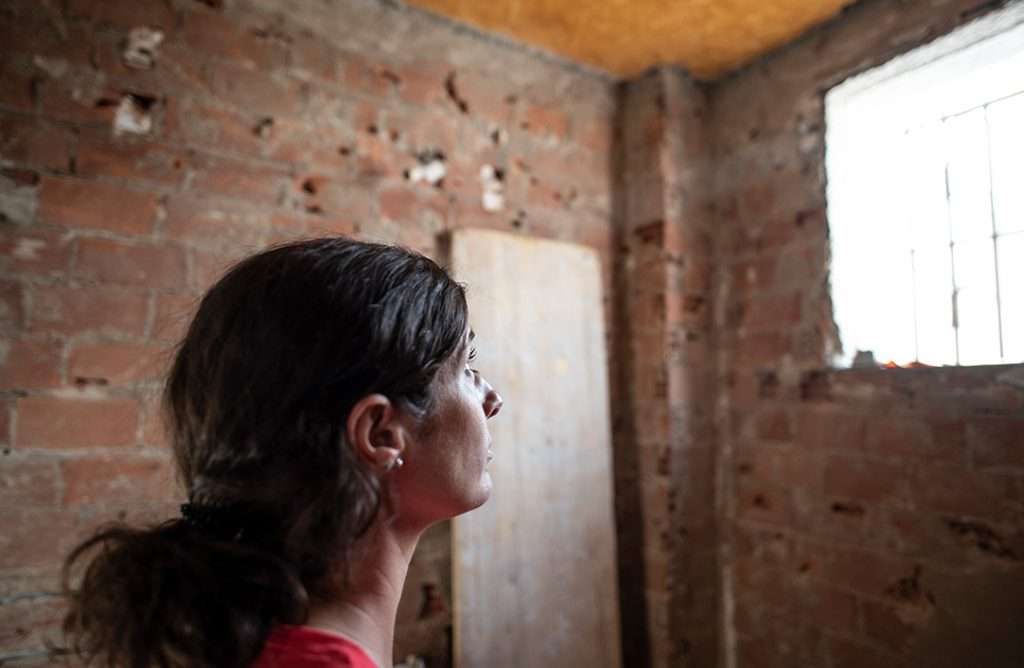
Incarcerated woman in red with hair pulled back looking out cell window.

Saprea > Blog > All Blogs > Breaking the Link Between Child Sexual Abuse and Incarceration: A Path to Healing

Share this blog on:
31936:full

Breaking the Link Between Child Sexual Abuse and Incarceration: A Path to Healing

“Clank!” The chilling sound of a jail cell locking is familiar from countless movies. But what if it wasn’t just a cinematic moment? What if it was your reality? You sit on an uncomfortable bed, thoughts racing through your mind as you ask yourself, “How did I get here?” For too many survivors of child sexual abuse, incarceration isn’t fiction—it’s their reality. Many incarcerated women ponder how they got there, without a clear answer. Maybe our society would benefit from a more thoughtful approach for how childhood trauma can pave a pathway to incarceration, prompting us to provide healing programs for survivors of child sexual abuse.

The Link Between Child Abuse and Incarceration

Research reveals a striking pattern among incarcerated women: up to 66% report experiencing childhood sexual abuse,1 more than double the rate found in the general female population (31%).2 While multiple factors contribute to incarceration, this dramatic statistical disparity demands attention. The consistency and magnitude of this relationship across studies point to childhood sexual abuse as a significant risk factor in women's pathways to imprisonment. As the saying goes, “Correlation is not causation.” But this level of high correlation should give us pause.

How Trauma Shapes Coping Mechanisms

The line between child sexual abuse and incarceration is not hard to draw. When a child experiences abuse, their safety is violated. The natural response from their brain is to seek safety. The survival part of their brain will not discern between constructive and destructive coping behaviors. As a natural consequence, a child may attach to harmful or maladaptive coping behaviors such as substance use, eating disorders, or suicidal ideation. This becomes more likely as they grow into their teenage and adult years. Using substances as an example, the survivor, now addicted, resorts to criminal activity to feed the addiction, eventually finding themselves involved with the justice system.
Image

Learn More About How Trauma Impacts Childhood Development

The effects of Child Sexual Abuse

Breaking the Cycle Through Healing Programs

We have reason to believe that if we can reduce the number of girls who experience child sexual abuse and provide healing programs for survivors, we could reduce the number of incarcerated women. In addition, if we can help incarcerated women heal from their child sexual abuse, we have reason to believe that we can reduce recidivism through trauma healing. Each of these assumptions will need to be studied extensively, but until then, we can work with the data we have to design promising interventions.

Creating Opportunities for Healing Within the System

Research reveals a critical window of opportunity within correctional facilities themselves. One study noted that for some survivors—approximately one-fifth of incarcerated women—their first disclosure of childhood sexual abuse occurs within an institutional setting. This finding suggests that correctional facilities may serve as an unexpected but important venue for initiating trauma recovery work.

The timing of these institutional disclosures is particularly significant. While many survivors carry their experiences in silence for years—with 45.8% delaying disclosure for a year or more3—even the environment like a correctional facility, combined with appropriate support services, may provide the security needed to begin addressing long-buried trauma. Rather than viewing these facilities solely as punitive environments, we can recognize their potential as spaces where healing can begin.

This revelation also underscores the importance of ensuring that correctional staff are adequately trained in trauma-informed approaches and that facilities maintain robust mental health services.4 When a woman chooses to disclose abuse—perhaps for the first time in her life—the system must be prepared to respond with appropriate support and resources. This preparation could transform what might otherwise be a missed opportunity into a crucial first step toward breaking the cycle of trauma and incarceration.

A Scalable Solution for Incarcerated Women

Starting in 2019, our team at Saprea piloted various healing programs within women’s facilities. This has been a challenging journey. We have seen good, measurable success with the curricula, but the implementation has been difficult to scale until recently.

Working with our partner, Edovo, Saprea deployed ten curriculum modules complete with comprehension testing to 1134 prison and jail facilities across the United States. In the first month of deployment, over 10,500 incarcerated women accessed the curricula, over 7,500 completed at least one module, and over 2,800 finished the tenth module. This scalable approach allows Saprea to conduct rigorous outcome-based research to determine whether our curriculum, which works in other settings, can reduce post-traumatic stress symptoms and enhance coping skills in this underserved, deserving population.

Hope for the Future: Expanding Healing Efforts

With these promising advances, the best is yet to come. As we expand healing efforts to survivors, including incarcerated men, we give them a chance to rewrite their stories and return to society healthy and ready to contribute. Breaking the cycle of child sexual abuse and incarceration starts with awareness and action. I imagine a world where the clank of a jail cell is less of a reality for survivors of child sexual abuse and can only be imagined by them through the fictional portrayals of Hollywood.

Share this post to help raise awareness and explore our healing programs for survivors here.

About the Author

Image

Chris Yadon, MPA

Managing Director
As Saprea’s first employee and Executive Director, Chris Yadon collaborated closely with the organization’s founders to launch and establish its operations in 2015. Chris now serves as the Managing Director, leading the organization’s public efforts to drive societal change around the issue of child sexual abuse. He has previously held executive leadership positions for start-up tech and healthcare organizations. Chris is committed to driving broad societal change to address child sexual abuse and uses his influence as a thought leader and strategist to inspire others to take action. He firmly believes we can collectively create a better future for our children. A sought-after speaker, Chris inspires audiences with timely topics such as overcoming emotional numbing by learning how to feel again, protecting children from child sexual abuse in a hypersexualized world, and how to intentionally drive societal change. He has been featured across several media platforms where he is requested to contribute as an industry leader and subject matter expert. Chris received a BA and an MPA degree from Brigham Young University. He is the grateful father of six children: three boys and three girls. He and his wife, Christy, have been married for 28 years.

Why Parents Don’t See Child Sexual Abuse as a Problem—And How Proximity Can Fix It

Mom and daughter sitting on couch together both holding electronic devices. Mom is looking over daughter's shoulder and smiling. Daughter is holding out device so her mom can see what she is doing.

Saprea > Blog > All Blogs > Why Parents Don’t See Child Sexual Abuse as a Problem—And How Proximity Can Fix It

Share this blog on:
31748:full

Why Parents Don’t See Child Sexual Abuse as a Problem—And How Proximity Can Fix It

Eighteen years ago, my wife Christy and I attended a parenting conference. At the time, our children were eight and six, and we were focused on learning how to be better parents. The conference was largely unmemorable except for one passing comment by one of the presenters. He said research is showing that the average age a boy will first be exposed to sexually explicit content is between nine and eleven, so if you want to be the first person to introduce the topic of sex, you better talk before that age. I thought about all that could go wrong with him learning about sex from other sources, but the most concerning risk was the potential for child sexual abuse.

I felt a pit in my stomach. I didn’t want my eight-year-old son to learn about sex the way I did – pieced together through media, jokes from friends, and a grossly inadequate awkward health class, but I could not imagine having “the talk” with him as an eight-year-old. As I struggled with what to do with these back-and-forth, conflicting thoughts, ultimately, proximity created urgency, and Christy and I decided to have “the talk” with our son.

Understanding Proximity and Urgency

Before sharing the rest of the story, I pause to emphasize that sex, generally, and child sexual abuse, specifically, are uncomfortable topics for most parents. Yet, they are critical to address with kids. Both proximity and urgency are essential in influencing and motivating behavior to overcome this discomfort and protect children from abuse.

By proximity, I mean a sense of closeness or being near to an issue. Without this sense of proximity, we often ignore significant problems, regardless of their severity. While each can stand alone, they often work together, with proximity fostering a stronger sense of urgency.

Why Parents Often Miss the Problem of Child Sexual Abuse

In my work addressing child sexual abuse, I see this phenomenon daily. Despite extensive research highlighting that child sexual abuse is a significant issue in every community, many parents and caregivers dismiss it as a distant problem, believing it happens to someone else, somewhere else. This dissonant, apathetic response is not because parents do not view child sexual abuse as horrific but because they view child sexual abuse as distant.

According to the Centers for Disease Control and Prevention (CDC) and other researchers, about 1 in 4 girls and 1 in 10 boys experience child sexual abuse in the United States.1, 2 Yet, a survey in my home state revealed that 65.4% of respondents—mostly parents—either disagreed (40.8%) or were neutral (24.6%) when asked if child sexual abuse is a problem in their immediate community (e.g., neighborhood, family, faith group, club, business).3

Only 34.6% of respondents acknowledged that child sexual abuse is an issue in their community. How can this be? Despite extensive discussions by researchers, news outlets, public health agencies, and nonprofits, a significant disconnect remains. Systems change expert John Kotter insightfully said, “Never underestimate the magnitude of the forces that reinforce complacency and that help maintain the status quo.”4 Perhaps we have underestimated the desire for humans to look away from something we do not want to face. Put another way, the lack of proximity reinforces our complacency.

What Is Proximity, and How Can It Help?

Survivors of child sexual abuse experience a significant amount of shame and stigma. This shame and stigma drive silence and secrecy. Survivors do not often tell their stories; if they do, they speak with fear of judgment.5 Most commonly, they share in very limited, closed circles. As a result, you and I interact with survivors of child sexual abuse often without having any idea what they have experienced in their past. I am not talking about acquaintances or casual friends. I am talking about close friends and even family. Yes, even within families, survivors often choose not to share about their child sexual abuse. The result? Most people do not think the issue is proximate.

What about urgency? When a threat feels proximate, urgency naturally follows. We respond, and we respond quickly. In the case of child sexual abuse, if I learn that my loved ones, those closest to me, experienced child sexual abuse, I will feel the urgency to help them heal and protect those I love, especially my children, from going through the same thing. Said differently, proximity leads to urgency.

Research supports this perspective. A study by experts at Johns Hopkins University suggest that when parents are actively engaged in prevention education, the risk of child sexual abuse can significantly decrease.6 This engagement is driven by a sense of proximity—understanding that the threat is real and close to home.

As we understand this connection, we can quickly see how stigmatizing child sexual abuse and shaming survivors into silence not only harms the survivor but creates environments that allow abuse to continue uninterrupted. As long as parents feel the risk is distant, child sexual abuse will continue to impact every community at higher rates than if it were confronted directly.

Turning Proximity into Urgent Action

Reflecting on the experience with my eight-year-old son, it becomes evident how proximity and urgency intersect to drive meaningful change. The presenter's reference to research on early exposure to sexually explicit content, coupled with firsthand accounts from loved ones, brought the issue uncomfortably close to home. This proximity created a sense of urgency that compelled my wife and me to initiate "the talk" despite our apprehensions. Our urgency was motivated by the proximate risk to our son, and that urgency overcame our conflicting thoughts about whether that moment was the right time.

I wish I could say I nailed that “big talk,” but like most things in parenting, the first time didn’t go so well. Yet eighteen years later, my twenty-six-year-old son has a healthy perspective about his sexuality - formed by hundreds of subsequent “little talks” with us as parents. Like me, he also heard about sex through media, jokes from friends, and a grossly inadequate, awkward health class, but he was equipped to handle it because he had our balancing voice. Proximity and urgency had met, changing our parenting behavior when he was eight years old.

Image

Reduce the Risk of Child Sexual Abuse

When parents are actively engaged in prevention education, the risk of child sexual abuse can significantly decrease.
Start the Conversation
Any significant change, whether a broad societal issue like child sexual abuse or an uncomfortable talk with my eight-year-old, requires urgency to motivate new patterns of behavior. Child sexual abuse is more prevelant in our lives than we might admit. Creating urgency through proximity can protect our kids. Start the conversation with your loved ones today and explore more parenting resources here.

About the Author

Image

Chris Yadon, MPA

Managing Director
As Saprea’s first employee and Executive Director, Chris Yadon collaborated closely with the organization’s founders to launch and establish its operations in 2015. Chris now serves as the Managing Director, leading the organization’s public efforts to drive societal change around the issue of child sexual abuse. He has previously held executive leadership positions for start-up tech and healthcare organizations. Chris is committed to driving broad societal change to address child sexual abuse and uses his influence as a thought leader and strategist to inspire others to take action. He firmly believes we can collectively create a better future for our children. A sought-after speaker, Chris inspires audiences with timely topics such as overcoming emotional numbing by learning how to feel again, protecting children from child sexual abuse in a hypersexualized world, and how to intentionally drive societal change. He has been featured across several media platforms where he is requested to contribute as an industry leader and subject matter expert. Chris received a BA and an MPA degree from Brigham Young University. He is the grateful father of six children: three boys and three girls. He and his wife, Christy, have been married for 28 years.

Common Symptoms Experienced by Adult Survivors of Child Sexual Abuse

Woman sitting in booth wearing a striped shirt and looking sad.

Saprea > Blog > All Blogs > Common Symptoms Experienced by Adult Survivors of Child Sexual Abuse

Share this blog on:
28188:full

Common Symptoms Experienced by Adult Survivors of Child Sexual Abuse

Childhood sexual abuse can have long-lasting debilitating effects throughout the life of a survivor. The impacts of sexual trauma are profound and far-reaching, affecting every aspect of an individual's life—physically, psychologically, cognitively, and socially. But why is this so?

Why Trauma Survivors Experience Lasting Symptoms

Trauma is said to be something experienced with our whole selves. In The Body Keeps the Score, Dr. Bessel van der Kolk states, “We have learned that trauma is not just an event that took place sometime in the past; it is also the imprint left by that experience on the mind, brain, and body. This imprint has ongoing consequences for how the human organism manages to survive in the present.”

During the formative years, children begin to establish a sense of self and identity by interpreting their experiences, making conclusions about their self-worth, and then construct a narrative about the world from those experiences. As the brain continues to develop into adulthood, those core belief systems create structural changes in the brain through the formation of neuropathways and become the foundation to how they see themselves, form relationships, and react to situations.

For example, when a child is raised in a supportive and nurturing environment with clear boundaries, consistent routines, and respectful communication, they can interpret the world as being safe, establish trusting interdependent connections, and tend to be flexible with their expectations. They may also form healthy core beliefs, such as: “I am ___” (e.g., capable, smart, strong, lovable, etc.). Unfortunately, sexual abuse can misconstrue how the child sees themselves, view the world, and relate with others. When sexual trauma is experienced, the child may then make conclusions that “I can’t trust anyone,” “it’s my fault,” “I am ___” (e.g., bad, worthless, dirty, unlovable, a burden, damaged, powerless, weak, a failure, inadequate, etc.).

When these destructive conclusions become the child’s misperceived reality, all future experiences get filtered through this belief system, which may then lead the individual to feel sad, anxious, ashamed, fearful, confused, and lonely. Sometimes, in an attempt to manage these uncomfortable emotions, an individual attempts to cope by engaging in unhealthy behaviors (e.g., substance use, risky sexual behavior, disassociation, emotional numbing, self-harm, sleeping too much, eating disorders, etc.). When an individual uses these maladaptive coping behaviors to deal with triggering situations and distressing emotions, neuropathways are again strengthened.

What Wires Together, Fires Together
In 1949, a neuropsychologist named Donald Hebb developed the phrase, ‘neurons that fire together wire together’. This phrase was used to describe how neural pathways are formed in the brain, respond together with the same stimulus, and are then reinforced through repetition. For example, if arousal and fear were ‘fired and wired’ together as a child, it is likely that distress will then be experienced during times of sexual intimacy. Another example may be that the abuser had a mustache, and anytime the survivor comes across someone with a similar pattern of facial hair, they may unwittingly experience panic and feel unsafe. However, even if traumatic responses have developed in a person’s life, they can, through intentional healing practices, diminish over time.

Trauma Response in the Brain & Body

Many victims of sexual abuse experience biological responses that are considered normal in an effort to cope with an abnormal situation. The limbic system, which acts like a command center, is a complex set of structures within the brain that is responsible for the fight-or-flight stress response. When the limbic system is activated, the adrenal and pituitary glands rapidly release stress hormones, such as cortisol, adrenaline, and norepinephrine, which start a chain of physiological responses in the sympathetic nervous system that aid in survival.

When experiences are interpreted as dangerous, the brain and body gear up for survival to either fight or flee from the situation. The brain sends a signal to release stress hormones into the bloodstream. The body responds by dilating pupils to improve eyesight, airways open, heart rate increases, and oxygen-rich blood is diverted from the digestive system and redirected to the muscles. When the threat is alleviated and the danger has passed, the parasympathetic nervous system, which acts as the rest-and-digest response, helps to regulate bodily functions. Muscles relax, heart rate slows, pupils constrict, blood pressure lowers, and energy conservation resumes.

When someone endures abuse and neuropathways are reinforced by negative core beliefs, the limbic system responses can become compounded and may result in a myriad of longer-term symptoms that impair everyday functioning. Repeated activation of the stress response can have an increasingly negative effect on the body. Chronically high levels of stress hormones may lead to long-term physical ailments, including immunosuppression, kidney damage, intestinal problems, headaches, hyperglycemia, weight gain, insomnia, irritability, depression, anxiety, and hypertension, which increases the risk of heart attacks and/or strokes.

Adverse Childhood Experiences Study

In 1995, Kaiser Permanente and the Center for Disease Control and Prevention conducted a longitudinal study using 17,337 participants to measure the effects of 10 adverse childhood experiences, referred to as ACEs, (e.g., emotional abuse, physical abuse, sexual abuse, mother treated violently, household substance abuse, household mental illness, parental separation/divorce, incarcerated household member, emotional neglect, and physical neglect). This monumental study concluded that the higher the score, the more at risk a person is for developing heart disease, cancer, diabetes, alcoholism, engaging in illicit drug use, experiencing financial stress, depression, suicide attempts, unintended pregnancy, sexual violence, poor academic achievement, and premature death.

The study found that 64% of adults in the United States reported they had experienced one type of ACE, and 17.3% of adults reported they had experienced four or more types of ACEs. Seeing how prevalent ACEs are, combined with the associated physical and psychological effects, it has been estimated that ACEs-related health consequences carry an estimated economic burden of $748 billion annually.

Common Symptoms of Trauma

While every survivor's journey is unique, there are common symptoms and challenges that many may face as they navigate their path to healing, which can include:

Physical

  • Chronic Pain: Backaches, neck and shoulder tension, headaches, joints, nerves, gastrointestinal issues, etc.
  • Sleep: Insomnia, hypersomnia, nightmares, parasomnia, paralysis, etc.
  • Miscellaneous: Fatigue, shallow breath/hyperventilating, dry mouth, nausea, vomiting, heart palpitations, shaking, sweating, hypervigilance, jumpy, restlessness/fidgeting, etc.

Psychological

  • Addiction: Illegal drugs, prescription medication, alcohol, smoking, vaping, etc.
  • Avoidance: situations, places, and people that remind of the trauma, eye contact, procrastination, lack of motivation, indecisiveness, emotional expression, intimacy, relationships, etc.
  • Dissociation: Flashbacks, emotional numbing, flat affect, and disconnect from thoughts, feelings, memories, or reality, etc.
  • Low Self-Esteem: Struggle with feelings of guilt, shame, self-worth, overly critical of oneself, self-blame, feeling fundamentally flawed, negative self-perception, a belief that they are never good enough, perfectionistic, etc.
  • Mood: Dysregulated & intense emotions, easily overwhelmed & overstimulated, suicidal ideation, paranoia, anxiety, depression, panic attacks, rage, despair, helplessness, hopelessness, irritability, etc.
  • Unsustainable Coping: Disordered eating, substance abuse, risky sexual behavior, pornography, self-harm, neglecting medical needs, aggression, impulsive reactions, over-compliance, gambling, uncontrolled shopping, compulsive exercise, excessive use of social media & video games, etc.

Cognitive

  • Concentration: Difficulty making decisions, delay in processing information, impairments with focus, ruminating or intrusive thoughts, overthinking, dwelling, obsessing, etc.
  • Executive Functioning: Difficulty with planning, organizing, time management, coordination, self-control, problem-solving, and decision-making.
  • Memory: Challenges with encoding, recognition, retention, and recall.

Social

  • Communication: Evading deep topics, unexpressed needs, verbalizing boundaries, arguments, passive/aggressive, blaming, circumventing confrontation, defensiveness, interrupting, etc.
  • Intimacy: Avoiding physical touch, heightened sense of vulnerability, feeling unsafe, challenges with establishing and maintaining boundaries, fear of abandonment, inability to form deep connections, difficulty forming relationships, unhealthy attachments, etc.
  • Isolation: Withdrawing from social interactions and activities, which leads to feelings of loneliness, inability to reach out for support or ask for help, not leaving the house, etc.
  • Relationships: Dysfunctional relationships with family, friends, and romantic partners, being overly controlling, codependency, unrealistic expectations, inability to trust, etc.

Coping & Managing Trauma Symptoms

While all of the aforementioned explains ‘why’ common long-term symptoms occur after childhood sexual abuse and outlines ‘what’ these common debilitating symptoms are, it can leave one feeling both overwhelmed and/or reassured. It is normal to feel either or both emotions simultaneously. Reassurance may come with the insight that, “I am not crazy, and my emotions are not crazy, but what happened to me was crazy” and the realization that “there’s a reason why I feel/act this way.” Rest assured that the healing journey doesn’t have to end there.

Dr. Dan Siegel, clinical professor of psychiatry at the UCLA School of Medicine, coined the phrase, ‘name it to tame it’ where he explains that the more you notice and identify your emotions and body sensations, the easier they are to manage. Ideally, discerning the ‘what’ and ‘why’ of these symptoms will aid survivors in reducing shame by fostering self-compassion and an understanding of thoughts, emotions, and bodily reactions to the endured trauma while also increasing their ability to effectively cope when triggered. Survivors can learn how to respond rather than react to triggers through intentional behavior shifts by repeatedly practicing grounding techniques and healthy coping strategies. By doing so, the structures of their brain can adapt, grow and change through the process of neuroplasticity that ultimately make these changes easier to maintain.

Among these initial steps toward recovery is to acknowledge that the abuse happened and the impact it had on one’s life. Acknowledgement is a healing practice that involves looking at the past and present with clarity and showing yourself compassion for where you’ve been and where you are now. A second healing practice is becoming more mindful. Mindfulness is purposefully paying attention with kindness and curiosity to the present moment. Lastly, one of the final steps toward reclaiming hope is to identify an aspirational goal toward well-being. Aspiration is a healing practice that involves directing your thoughts and actions toward healing. This past, present, and future approach encompasses a holistic framework for trauma healing.

Despite survivors experiencing many complex symptoms, it is essential to recognize that healing is possible. While sexual trauma is not your fault, healing is your responsibility. Many individuals have embarked on the journey of healing, diligently doing the work and finding their way to a place of thriving. Their stories serve as beacons of hope, reminding us that despite the darkness of the past, there is light ahead. Remember, healing is not linear; it's okay and normal to have setbacks along the way. Keep moving forward, one step at a time, and trust that brighter days lie ahead. By embracing patience throughout the journey, seeking support, allowing yourself to feel, and nurturing self-compassion, healing becomes a possibility and a tangible reality. Take care of yourself, honor your journey, and believe in the power of resilience to transform pain into strength. Together, we can create a future where victims of abuse not only survive but thrive.

Saprea's Healing Resources

At Saprea, we are dedicated to educating others about the impact of child sexual abuse, promoting healthier behavior patterns, addressing maladaptive survival responses. Leveraging the latest research, we offer a wide array of resources designed for survivors and their support networks.

Image

Saprea Healing Webinar

Saprea administers a free 4.5 hour interactive and educational healing webinar designed to help adult female survivors jumpstart their healing from home. The webinar is led by a clinical therapist who specializes in trauma recovery, along with a co-facilitator. Survivors will have the opportunity to participate in classes, engage in group discussions, mindfully connect with their body, and build a community with fellow survivors.


Image

Saprea Retreat

Saprea provides a free four-day retreat in Utah for adult women survivors of childhood sexual abuse that is clinically informed and led by a team of licensed therapists and case managers. The retreat teaches survivors about the impacts of trauma, provides opportunities to apply healing tools, and builds a community of support. Afterwards, participants are invited to continue their learning in subsequent online courses that builds a deeper understanding and application of healing principles.


Image

Saprea Support Groups

Saprea offers in-person and virtual survivor-led support groups with individuals that have shared experiences and motivation to build a community of emotional safety, understanding, and a desire for growth. Facilitators receive training to lead these research -backed and clinically informed groups in a confidential and nurturing environment wherein survivors can connect with one another, provide validation, empathy, and solidarity in the healing journey.

In addition to healing services for adult women survivors of childhood sexual abuse, Saprea provides education for prevention of abuse and works to increase the public’s awareness of the issue. Learn more about Saprea, a 501(c)(3) nonprofit, and what you can do to get involved.

About the Author

Image

Rachel Gardner, L.C.S.W.

CLINICAL THERAPIST
Rachel completed her Master of Social Work degree at the University of Southern California in 2012 and earned her License in Clinical Social Work after working with diverse populations across the lifespan in a variety of in & out-patient settings. She is trained in Trauma-Focused Cognitive Behavioral Therapy (TFCBT), Dialectal Behavioral Therapy (DBT), Acceptance & Commitment Therapy (ACT), Eye-Movement Desensitization & Reprocessing (EMDR), Internal Family Systems (IFS), Emotion-Focused Therapy (EFT), Structural Family Therapy, Brainspotting, Sand Tray Therapy, Equine-Assisted Psychotherapy, Sound Healing, and is working toward certification in Yoga Therapy. Rachel is passionate to ignite hope, encourage perseverance, and promote balance throughout her client’s transformational journey so they can reach their highest potential and thrive. She is inspired by and finds it rejuvenating to empower individuals to make sustainable growth and is humbled and honored to be permitted to walk the path of healing together. In her free time, Rachel can be found experimenting with new recipes, hosting game nights, at the gym, volunteering, gardening, bonding with her horse, snuggling with her cats, and exploring nature through camping, hiking, biking, kayaking, and horseback riding.

Statute of Limitations on Sexual Abuse

Dad with his hand on his son's shoulder sitting on a couch having a conversation

Saprea > Blog > All Blogs > Statute of Limitations on Sexual Abuse

Share this blog on:
28105:full

Statute of Limitations on Sexual Abuse

In our work with individuals who were sexually abused, they often discuss the burden that comes with weighing difficult questions about when to come forward with details of the abuse they experienced. They wonder if they should take legal action or if that is even an option when the abuse occurred many years in the past.
Statute of Limitations
A law that sets a time limit on when someone can take legal action for a particular crime or offense.

A statute of limitations is a law that sets a time limit on when someone can take legal action for a particular crime or offense. Simply put, after a crime happens, there's a set period of time when the police or justice system can charge someone, or a victim can sue for damages. If that time passes, the legal options expire, even if there's evidence or someone confesses to the crime.

For example, let's say the statute of limitations for robbery is five years. If a person commits a robbery, but nobody takes legal action during those five years, the offender can no longer be charged for that specific crime.

Why Do Statute of Limitations Exist?

These laws are intended to encourage prompt action, ensure relevant evidence can be examined in a timely way, and provide a degree of certainty that the crime occurred. Statute deadlines vary depending on the type of offense and the jurisdiction where the crime was perpetrated. The idea of a statute of limitations for child sexual abuse has recently been examined with a greater understanding of the long-term impacts of childhood trauma and the reasons why survivors often delay disclosing the abuse they experienced.

In fact, some studies indicate that more than 25% of survivors do not disclose until they reach adulthood. Factors like shame, fear, traumatic stress, and dependent relationships with perpetrators can delay a survivor’s willingness or ability to disclose abuse.1 The trend many governments are taking to eliminate or extend criminal and civil statutes of limitations reflects the acknowledgment that survivors often need many years to process their trauma and come forward about their abuse.

Recognizing these dynamics, there has been an increase in statute of limitations reform since the early 2000s as several child sex abuse scandals were reported on with increased attention. From 2002–2020, over 30 states in the U.S. amended their laws to extend or eliminate limitations. One of the earliest and largest adjustments came in 2019, when New York extended its statute to allow survivors to press charges until age 28 in felony cases and file civil suits until age 55.2 Many victim advocates consider this period of change as both validating to survivors of abuse and enhancing the ability for individuals to seek justice.

25%+
of survivors do not disclose until they reach adulthood.

What Is the Statute of Limitations That Exist in My Area?

As of 2024, 44 states have completely eliminated statutes of limitations for certain types of felony sex crimes against children, while others have statutes ranging from 3 to 30+ years after the survivor reaches adulthood. In many states, survivors can still press for civil charges as there is no statute of limitations. Other states have window laws open for victims to raise their claims of past abuse, even if they were victimized more than 20 years ago.3

Several organizations and agencies assist survivors of sexual abuse in accessing updated information about the statute of limitations in their state. You can learn more at RAINN and CHILD USA, which provide breakdowns of the various laws in each state or territory.

What Is the Difference Between a Statute of Limitations, Lookback Windows, Revival Law, or “Revival Window?”

Lookback windows provide a temporary suspension of the statute of limitations, enabling survivors to bring their cases to court when they were unable to do so because of an expired statute of limitations. These windows aim to address the delayed reporting of sexual abuse, which could have been influenced by trauma, fear, or manipulation by the abuser. While a civil suit takes a different form than a criminal trial, these opportunities afford those who were sexually abused to legally confront the individuals or organizations who were party to wrongdoing.

The Sean P. McImail Statute of Limitations Research Institute explains, “Revival laws establish a specific period of time during which survivors can bring previously expired civil claims to court. There are two types of revival laws: (1) revival windows and (2) revival age limits. When the revival period is a set amount of time after the law is passed, it is called a revival window, and claims can be filed while the window is open. States have opened windows for a few years or permanently. When the revival period is set at a survivor’s age, it is called a revival age limit, and claims can be filed until a survivor reaches that specific age. The age states choose ranges from 27–55.”4

How Can I Find Information About Statutes of Limitations in Countries Other than the United States?

You might consider reviewing official government websites or resources, such as from a Ministry of Justice or the national legislature. These often provide detailed information on laws and statutes. There are also legal databases that offer more detailed information:

  • World Legal Information Institute (WorldLII): WorldLII offers legal information from various countries.
  • Some universities and organizations offer research tools for international law. For example, NYU has GlobaLex. A project by the International Development Law Organization (IDLO), provides legal resources and documents on various areas and topics of international law.

Additionally, internet searches can help you find more information about laws in your area. Use search terms like "sexual abuse statute of limitations [country]" or "[country] sexual abuse laws."

Taking Legal Action and Reporting Abuse

Reporting child sex crimes to law enforcement as soon as possible often provides the best chance of successful prosecution. However, this process can be very demanding and difficult. Even if the criminal statute of limitations has expired, survivors may have other legal options like civil lawsuits or victim compensation funds. The current realities of statutes of limitations remain complex. We encourage survivors to contact individuals and services who can help them understand their rights and options. Taking back your choice, power, and voice can be an important part of the healing process.

If you are a parent of a victim, reporting something like child sexual abuse can be a challenging and unfamiliar process. As you factor in fears about your child’s ongoing well-being, as well as concerns about the possible impacts that reporting may have, you might feel overwhelmed. Saprea offers this resource to help parents navigate the complex situation of reporting child sexual abuse.

About the Author

Image

Brian Walker

Research and Program Development Strategist
Brian is a Research and Program Development Strategist at Saprea. Brian spent over a decade of his career teaching high school social studies and serving in administrative capacities at a residential treatment center for teen boys who struggled with anxiety, depression, trauma, and learning disabilities. He has directly observed the effects of trauma and abuse as well as the healing that can come to both individuals and families. In addition to his full-time responsibilities, Brian has served as an accrediation evaluator for schools and as an aftercare coach for clients and families transitioning from intensive mental health treatment. Brian has enjoyed presenting regularly at academic, professional, and religious leadership conferences. He holds a Bachelor of Arts degree in history teaching from Brigham Young University. You can find Brian often hiking the Utah mountain trails in search of spiritual enlightenment and photo opportunities or trying out a new recipe in his ambitious but under-stocked kitchen.