
Why Parents Don’t See Child Sexual Abuse as a Problem—And How Proximity Can Fix It
Eighteen years ago, my wife Christy and I attended a parenting conference. At the time, our children were eight and six, and we were focused on learning how to be better parents. The conference was largely unmemorable except for one passing comment by one of the presenters. He said research is showing that the average age a boy will first be exposed to sexually explicit content is between nine and eleven, so if you want to be the first person to introduce the topic of sex, you better talk before that age. I thought about all that could go wrong with him learning about sex from other sources, but the most concerning risk was the potential for child sexual abuse.
I felt a pit in my stomach. I didn’t want my eight-year-old son to learn about sex the way I did – pieced together through media, jokes from friends, and a grossly inadequate awkward health class, but I could not imagine having “the talk” with him as an eight-year-old. As I struggled with what to do with these back-and-forth, conflicting thoughts, ultimately, proximity created urgency, and Christy and I decided to have “the talk” with our son.
Understanding Proximity and Urgency
Before sharing the rest of the story, I pause to emphasize that sex, generally, and child sexual abuse, specifically, are uncomfortable topics for most parents. Yet, they are critical to address with kids. Both proximity and urgency are essential in influencing and motivating behavior to overcome this discomfort and protect children from abuse.
By proximity, I mean a sense of closeness or being near to an issue. Without this sense of proximity, we often ignore significant problems, regardless of their severity. While each can stand alone, they often work together, with proximity fostering a stronger sense of urgency.
Why Parents Often Miss the Problem of Child Sexual Abuse
In my work addressing child sexual abuse, I see this phenomenon daily. Despite extensive research highlighting that child sexual abuse is a significant issue in every community, many parents and caregivers dismiss it as a distant problem, believing it happens to someone else, somewhere else. This dissonant, apathetic response is not because parents do not view child sexual abuse as horrific but because they view child sexual abuse as distant.
According to the Centers for Disease Control and Prevention (CDC) and other researchers, about 1 in 4 girls and 1 in 10 boys experience child sexual abuse in the United States.1, 2 Yet, a survey in my home state revealed that 65.4% of respondents—mostly parents—either disagreed (40.8%) or were neutral (24.6%) when asked if child sexual abuse is a problem in their immediate community (e.g., neighborhood, family, faith group, club, business).3
Only 34.6% of respondents acknowledged that child sexual abuse is an issue in their community. How can this be? Despite extensive discussions by researchers, news outlets, public health agencies, and nonprofits, a significant disconnect remains. Systems change expert John Kotter insightfully said, “Never underestimate the magnitude of the forces that reinforce complacency and that help maintain the status quo.”4 Perhaps we have underestimated the desire for humans to look away from something we do not want to face. Put another way, the lack of proximity reinforces our complacency.
What Is Proximity, and How Can It Help?
Survivors of child sexual abuse experience a significant amount of shame and stigma. This shame and stigma drive silence and secrecy. Survivors do not often tell their stories; if they do, they speak with fear of judgment.5 Most commonly, they share in very limited, closed circles. As a result, you and I interact with survivors of child sexual abuse often without having any idea what they have experienced in their past. I am not talking about acquaintances or casual friends. I am talking about close friends and even family. Yes, even within families, survivors often choose not to share about their child sexual abuse. The result? Most people do not think the issue is proximate.
What about urgency? When a threat feels proximate, urgency naturally follows. We respond, and we respond quickly. In the case of child sexual abuse, if I learn that my loved ones, those closest to me, experienced child sexual abuse, I will feel the urgency to help them heal and protect those I love, especially my children, from going through the same thing. Said differently, proximity leads to urgency.
Research supports this perspective. A study by experts at Johns Hopkins University suggest that when parents are actively engaged in prevention education, the risk of child sexual abuse can significantly decrease.6 This engagement is driven by a sense of proximity—understanding that the threat is real and close to home.
As we understand this connection, we can quickly see how stigmatizing child sexual abuse and shaming survivors into silence not only harms the survivor but creates environments that allow abuse to continue uninterrupted. As long as parents feel the risk is distant, child sexual abuse will continue to impact every community at higher rates than if it were confronted directly.
Turning Proximity into Urgent Action
Reflecting on the experience with my eight-year-old son, it becomes evident how proximity and urgency intersect to drive meaningful change. The presenter's reference to research on early exposure to sexually explicit content, coupled with firsthand accounts from loved ones, brought the issue uncomfortably close to home. This proximity created a sense of urgency that compelled my wife and me to initiate "the talk" despite our apprehensions. Our urgency was motivated by the proximate risk to our son, and that urgency overcame our conflicting thoughts about whether that moment was the right time.
I wish I could say I nailed that “big talk,” but like most things in parenting, the first time didn’t go so well. Yet eighteen years later, my twenty-six-year-old son has a healthy perspective about his sexuality - formed by hundreds of subsequent “little talks” with us as parents. Like me, he also heard about sex through media, jokes from friends, and a grossly inadequate, awkward health class, but he was equipped to handle it because he had our balancing voice. Proximity and urgency had met, changing our parenting behavior when he was eight years old.

Any significant change, whether a broad societal issue like child sexual abuse or an uncomfortable talk with my eight-year-old, requires urgency to motivate new patterns of behavior. Child sexual abuse is more prevelant in our lives than we might admit. Creating urgency through proximity can protect our kids. Start the conversation with your loved ones today and explore more parenting resources here.
About the Author

Chris Yadon, MPA
Managing Director
As Saprea’s first employee and Executive Director, Chris Yadon collaborated closely with the organization’s founders to launch and establish its operations in 2015. Chris now serves as the Managing Director, leading the organization’s public efforts to drive societal change around the issue of child sexual abuse. He has previously held executive leadership positions for start-up tech and healthcare organizations.
Chris is committed to driving broad societal change to address child sexual abuse and uses his influence as a thought leader and strategist to inspire others to take action. He firmly believes we can collectively create a better future for our children.
A sought-after speaker, Chris inspires audiences with timely topics such as overcoming emotional numbing by learning how to feel again, protecting children from child sexual abuse in a hypersexualized world, and how to intentionally drive societal change. He has been featured across several media platforms where he is requested to contribute as an industry leader and subject matter expert.
Chris received a BA and an MPA degree from Brigham Young University. He is the grateful father of six children: three boys and three girls. He and his wife, Christy, have been married for 28 years.
Recent blogs
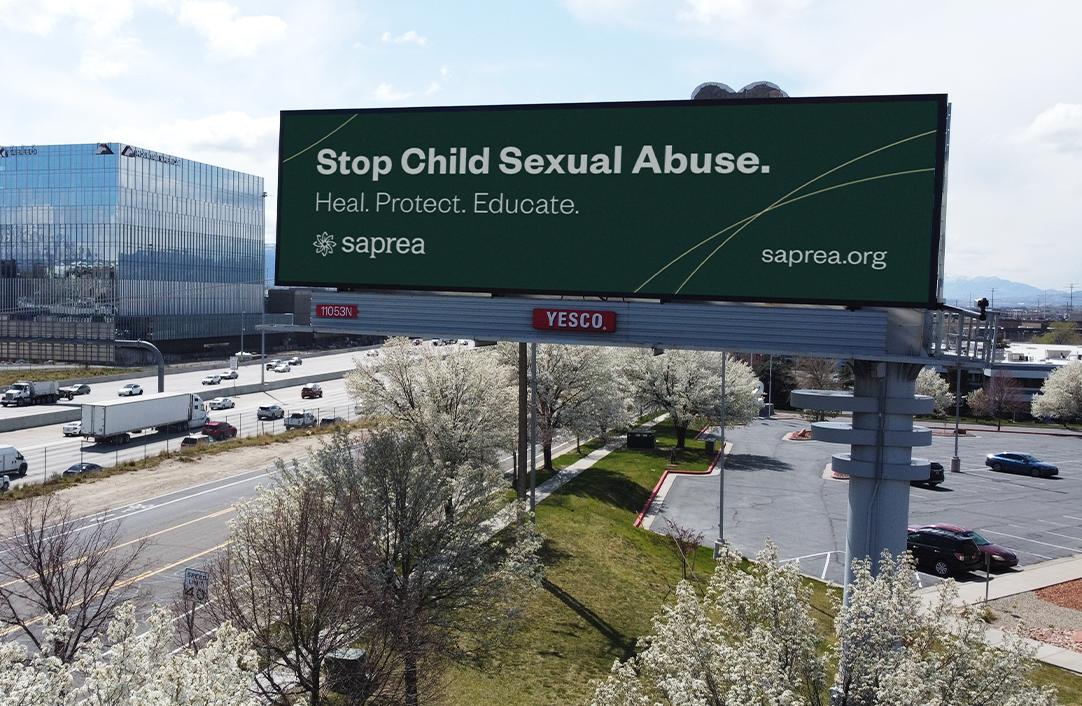
How Generous Partners Are Helping Saprea Raise Child Sexual Abuse Awareness
Over the past year, Saprea’s donors and partners—including YESCO and the RLC Family Foundation—have made it possible to expand awareness of child sexual abuse through impactful billboard campaigns, reaching communities with messages of prevention, hope, and healing.
Read this article

Conversation Prompts for Parents: Talking About Sensitive Topics
Starting conversations about online safety and sextortion with teens can feel difficult. These practical conversation prompts help parents discuss sensitive topics, recognize red flags, and build trust so young people feel safe asking for help when they need it.
Read this article

Common Platforms Where Sextortion Begins
Sextortion often begins on platforms teens use most, including social media, gaming chats, livestreams, and anonymous messaging apps. Understanding these high-risk spaces and teaching young people to recognize red flags can help parents protect them from online predators.
Read this article