
Breaking the Link Between Child Sexual Abuse and Incarceration: A Path to Healing
“Clank!” The chilling sound of a jail cell locking is familiar from countless movies. But what if it wasn’t just a cinematic moment? What if it was your reality? You sit on an uncomfortable bed, thoughts racing through your mind as you ask yourself, “How did I get here?” For too many survivors of child sexual abuse, incarceration isn’t fiction—it’s their reality. Many incarcerated women ponder how they got there, without a clear answer. Maybe our society would benefit from a more thoughtful approach for how childhood trauma can pave a pathway to incarceration, prompting us to provide healing programs for survivors of child sexual abuse.
The Link Between Child Abuse and Incarceration
Research reveals a striking pattern among incarcerated women: up to 66% report experiencing childhood sexual abuse,1 more than double the rate found in the general female population (31%).2 While multiple factors contribute to incarceration, this dramatic statistical disparity demands attention. The consistency and magnitude of this relationship across studies point to childhood sexual abuse as a significant risk factor in women's pathways to imprisonment. As the saying goes, “Correlation is not causation.” But this level of high correlation should give us pause.
How Trauma Shapes Coping Mechanisms
The line between child sexual abuse and incarceration is not hard to draw. When a child experiences abuse, their safety is violated. The natural response from their brain is to seek safety. The survival part of their brain will not discern between constructive and destructive coping behaviors. As a natural consequence, a child may attach to harmful or maladaptive coping behaviors such as substance use, eating disorders, or suicidal ideation. This becomes more likely as they grow into their teenage and adult years. Using substances as an example, the survivor, now addicted, resorts to criminal activity to feed the addiction, eventually finding themselves involved with the justice system.

Breaking the Cycle Through Healing Programs
We have reason to believe that if we can reduce the number of girls who experience child sexual abuse and provide healing programs for survivors, we could reduce the number of incarcerated women. In addition, if we can help incarcerated women heal from their child sexual abuse, we have reason to believe that we can reduce recidivism through trauma healing. Each of these assumptions will need to be studied extensively, but until then, we can work with the data we have to design promising interventions.
Creating Opportunities for Healing Within the System
Research reveals a critical window of opportunity within correctional facilities themselves. One study noted that for some survivors—approximately one-fifth of incarcerated women—their first disclosure of childhood sexual abuse occurs within an institutional setting. This finding suggests that correctional facilities may serve as an unexpected but important venue for initiating trauma recovery work.
The timing of these institutional disclosures is particularly significant. While many survivors carry their experiences in silence for years—with 45.8% delaying disclosure for a year or more3—even the environment like a correctional facility, combined with appropriate support services, may provide the security needed to begin addressing long-buried trauma. Rather than viewing these facilities solely as punitive environments, we can recognize their potential as spaces where healing can begin.
This revelation also underscores the importance of ensuring that correctional staff are adequately trained in trauma-informed approaches and that facilities maintain robust mental health services.4 When a woman chooses to disclose abuse—perhaps for the first time in her life—the system must be prepared to respond with appropriate support and resources. This preparation could transform what might otherwise be a missed opportunity into a crucial first step toward breaking the cycle of trauma and incarceration.
A Scalable Solution for Incarcerated Women
Starting in 2019, our team at Saprea piloted various healing programs within women’s facilities. This has been a challenging journey. We have seen good, measurable success with the curricula, but the implementation has been difficult to scale until recently.
Working with our partner, Edovo, Saprea deployed ten curriculum modules complete with comprehension testing to 1134 prison and jail facilities across the United States. In the first month of deployment, over 10,500 incarcerated women accessed the curricula, over 7,500 completed at least one module, and over 2,800 finished the tenth module. This scalable approach allows Saprea to conduct rigorous outcome-based research to determine whether our curriculum, which works in other settings, can reduce post-traumatic stress symptoms and enhance coping skills in this underserved, deserving population.
Hope for the Future: Expanding Healing Efforts
With these promising advances, the best is yet to come. As we expand healing efforts to survivors, including incarcerated men, we give them a chance to rewrite their stories and return to society healthy and ready to contribute. Breaking the cycle of child sexual abuse and incarceration starts with awareness and action. I imagine a world where the clank of a jail cell is less of a reality for survivors of child sexual abuse and can only be imagined by them through the fictional portrayals of Hollywood.
Share this post to help raise awareness and explore our healing programs for survivors here.
About the Author

Chris Yadon, MPA
Managing Director
As Saprea’s first employee and Executive Director, Chris Yadon collaborated closely with the organization’s founders to launch and establish its operations in 2015. Chris now serves as the Managing Director, leading the organization’s public efforts to drive societal change around the issue of child sexual abuse. He has previously held executive leadership positions for start-up tech and healthcare organizations.
Chris is committed to driving broad societal change to address child sexual abuse and uses his influence as a thought leader and strategist to inspire others to take action. He firmly believes we can collectively create a better future for our children.
A sought-after speaker, Chris inspires audiences with timely topics such as overcoming emotional numbing by learning how to feel again, protecting children from child sexual abuse in a hypersexualized world, and how to intentionally drive societal change. He has been featured across several media platforms where he is requested to contribute as an industry leader and subject matter expert.
Chris received a BA and an MPA degree from Brigham Young University. He is the grateful father of six children: three boys and three girls. He and his wife, Christy, have been married for 28 years.
Recent blogs
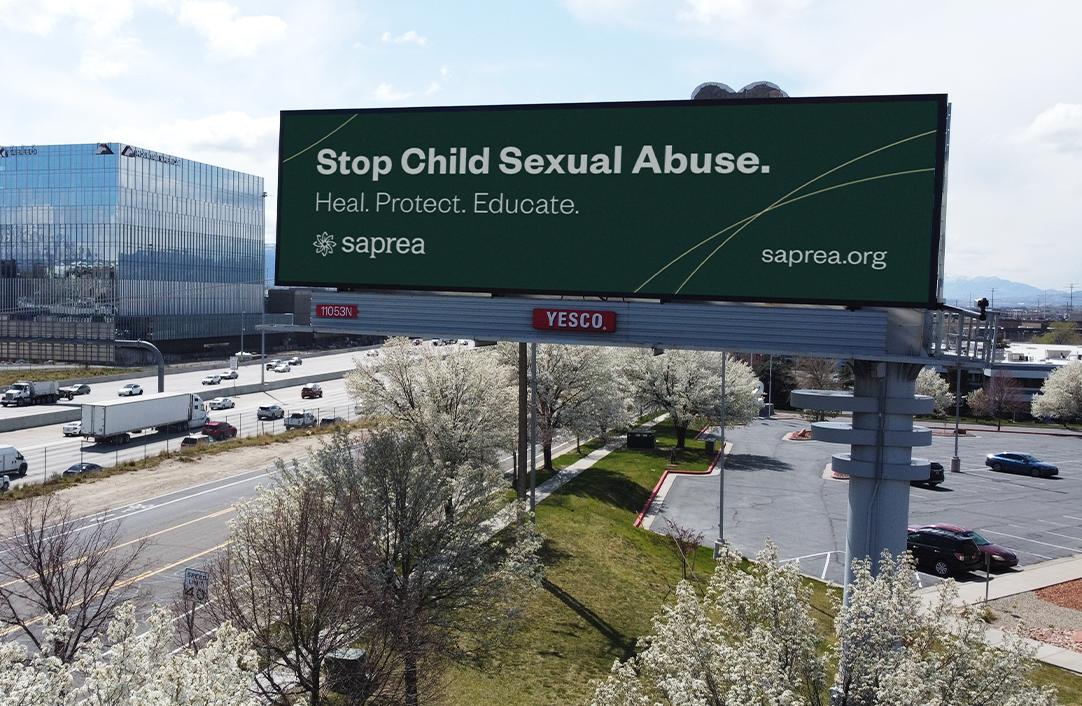
How Generous Partners Are Helping Saprea Raise Child Sexual Abuse Awareness
Over the past year, Saprea’s donors and partners—including YESCO and the RLC Family Foundation—have made it possible to expand awareness of child sexual abuse through impactful billboard campaigns, reaching communities with messages of prevention, hope, and healing.
Read this article

Conversation Prompts for Parents: Talking About Sensitive Topics
Starting conversations about online safety and sextortion with teens can feel difficult. These practical conversation prompts help parents discuss sensitive topics, recognize red flags, and build trust so young people feel safe asking for help when they need it.
Read this article

Common Platforms Where Sextortion Begins
Sextortion often begins on platforms teens use most, including social media, gaming chats, livestreams, and anonymous messaging apps. Understanding these high-risk spaces and teaching young people to recognize red flags can help parents protect them from online predators.
Read this article